Climate Week NYC 2026: Global Commons Alliance on Climate Security, Nature and Planetary Boundaries
24/09/2026
Climate Week NYC 2026 brought Global Commons Alliance members and partners together for a week of events on climate security, nature restoration and planetary science. Highlights included a New Security Agenda briefing, the launch of the Planetary Health Check 2026, and UN General Assembly addresses linking clean energy to national security. Here’s our recap of the week so far.
This week, Climate Week NYC 2026 opened alongside the UN General Assembly’s High-Level Week against a backdrop few could ignore: record heat, fractured supply chains, and conflict-strained energy systems made one thing clear — climate, security and economic resilience are no longer separate issues, but a single, interconnected challenge that must be addressed together.
As UK Foreign Secretary Ed Miliband put it in his Climate Week NYC Opening Ceremony address, climate breakdown must be an issue for foreign, energy and prime ministers alike as well as “the security community, not just the activist community; the generals, not just the green campaigners.” UN Climate Chief Simon Stiell was even more direct, stressing that the clean energy transition “is a development strategy, an industrial strategy, a health strategy, and a security strategy.”
Australian Prime Minister Anthony Albanese pointed to the damage already done: “We have seen it up close – from increasingly intense bushfires and floods, to the damage warming oceans are wreaking on our vulnerable coastlines.” Iceland’s Prime Minister Kristrún Frostadóttir offered a note on strategic climate risk “Resilience, in other words, isn’t a response. It’s a foundation you pour long before anyone tells you the storm is coming.”
The UN General Assembly, presided over for the first time by Bangladesh’s Khalilur Rahman, struck the same chord: he pointed to the disasters in Nepal and China as “yet another horrible climax to our collectively insufficient response to climate change.”
That was the backdrop the Global Commons Alliance stepped into this week, across nearly forty events involving and hosted by our members spanning science, culture, finance, law and diplomacy. Here’s some of what stood out.
From Film Premieres to Planetary Health
The week opened on Sunday with How to Live on Earth, the newly released documentary presented by Benedict Cumberbatch, produced by Open Planet Studios with the Villars Institute and Silvania. Executive Producer Jonnie Hughes described the film’s ambition simply: “we wanted audiences to discover that a future in which humankind works with nature, rather than against it, may not be far away.” You can watch the documentary on YouTube, which by the end of the week had 1 million views!
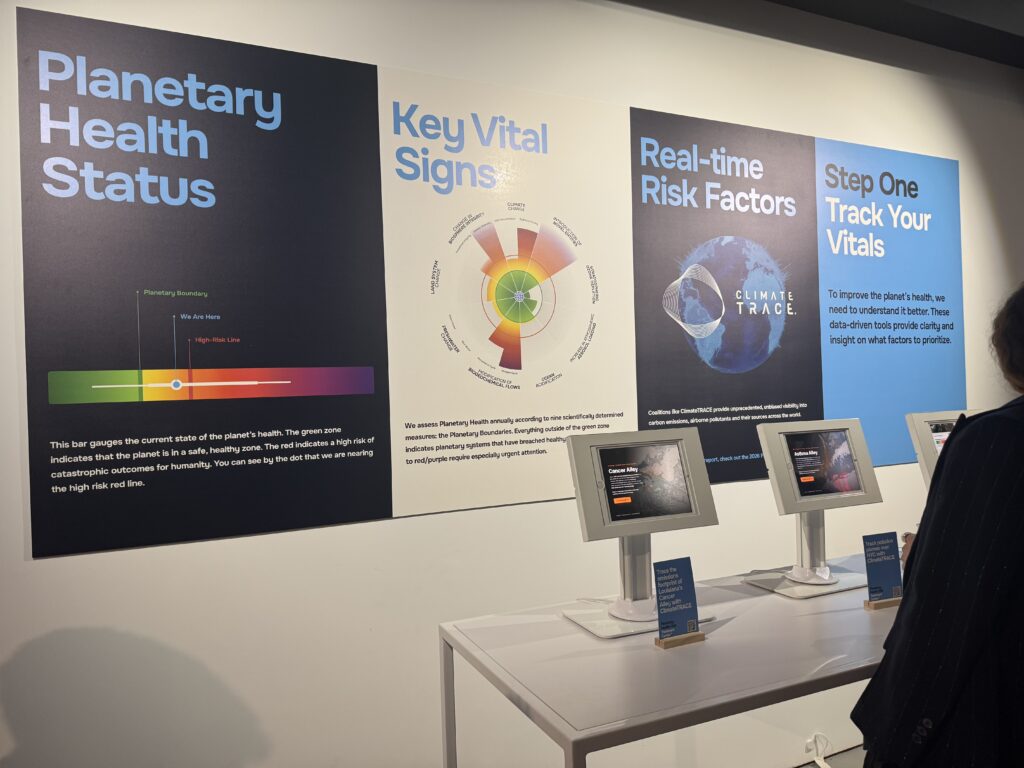
Monday was packed with member events as the Planetary Health Alliance co-hosted a live screening and classroom Q&A on planetary health in the Anthropocene; the Planetary Guardians opened their Planetary Health Club pop-up, an immersive space exploring the links between human and planetary health; and Project Basecamp and the University of Exeter’s Nature and Climate Impact Team brought sport into the conversation with ‘The Heat Is On’, which explored what a warming world means for culture, sport and the athletes and fans who love it, with special guest Rainn Wilson.
Security, science and the UN stage
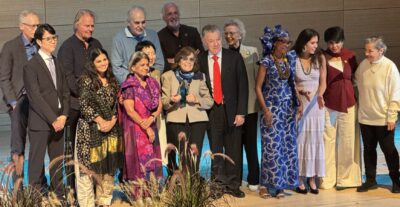
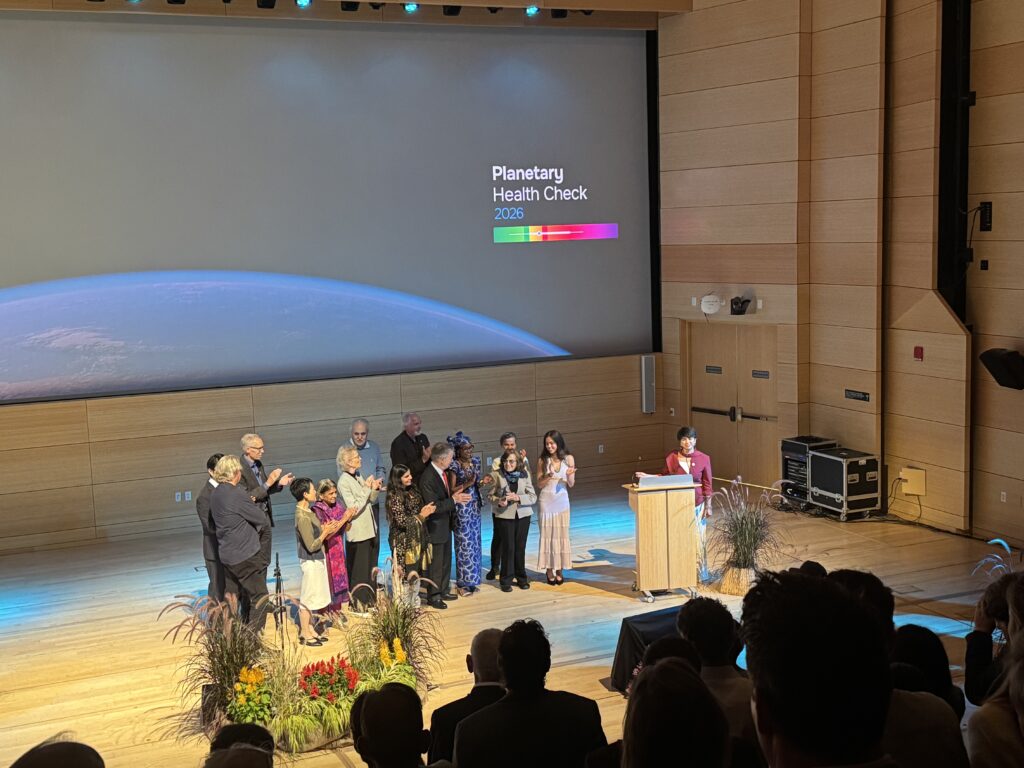
The launch of the Planetary Health Check 2026, unveiled by more than 60 scientists from the Planetary Boundaries Science Lab at the Potsdam Institute for Climate Impact Research, brought a stark headline: seven of nine planetary boundaries have now been transgressed – but we have the opportunity to alter our trajectory. As Earth Commission Co-Chair Johan Rockström put it: “We do not have the luxury of time, but we do have the knowledge, capacity and solutions to change course. Accelerating action to return to the safe operating space across all Planetary Boundaries is essential to protect lives and livelihoods, and to deliver on the promise of shared future prosperity.”
The UN General Assembly’s High-Level Week formally opened its General Debate on Tuesday, with Secretary-General António Guterres warning of cascading conflicts and a widening global divide as 193 member states prepared to take the floor. He framed the climate crisis as one of four defining “tests of power” facing the world right now alongside conflict, inequality and AI, calling it “the most profound intergenerational power imbalance”.
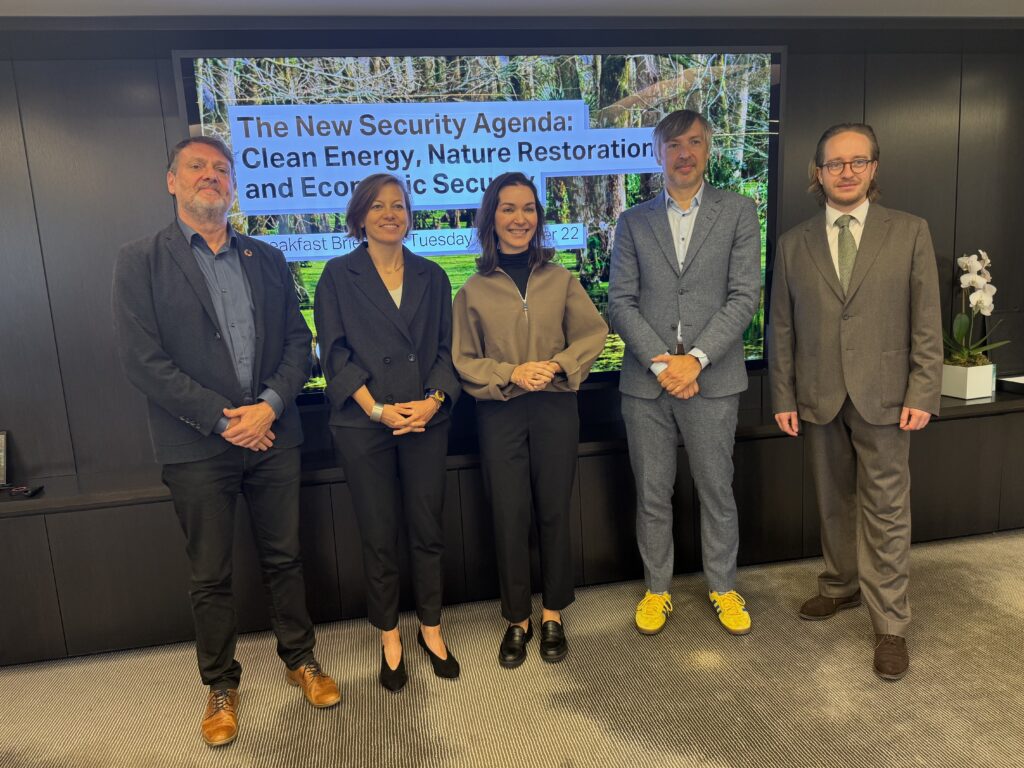
Just a few blocks away, ClientEarth and the GCA Secretariat were putting this framing into practice with the event ‘The New Security Agenda: Clean Energy, Nature Restoration, and Economic Security’, examining how a clean energy transition, resilient food and water systems, and nature restoration together build strategic resilience against climate risk, conflict and economic volatility. ClientEarth also launched a related briefing on how a new security agenda can fold clean energy, nature restoration and economic security into the definition of national security itself.
The day closed with the Planetary Health Alliance’s ‘Finding the Media Hooks’ session, where five experts pitched underreported stories at the intersection of demographics and planetary health to a room of journalists.
Nature communications
Wednesday belonged to nature and the words we use to talk about it. The Science Based Targets Network (SBTN), UN Global Compact and Accountability Accelerator convened ‘Step Up for Nature: From Corporate Ambition to Science-Based Action’, bringing corporate leaders together to mark progress on nature targets and preview SBTN’s updated 2026 methods and guidance, which is due for release later this year.
The week before, SBTN, Accountability Accelerator and EBP Schweiz published a new report drawing on conversations with executives from 14 companies which finds that science-based targets for nature are becoming a practical tool for better business management. Alongside WWF and the Lincoln Institute for Land Policy, this week SBTN also launched a Freshwater Basin Threshold Tool, giving companies and investors a science-based way to understand water risk in climate-threatened river basins.
On Wednesday Johan Rockström joined the Stockholm Resilience Centre, Future Earth, We Don’t Have Time, the Planetary Guardians, the GCA and the UN Secretary-General’s Youth Advisory Group on Climate Change to launch Planetary Communications, a new framework and handbook built with more than 100 researchers to help communicators talk about planetary boundaries in a polarized information landscape.
Accountability, up close
GCA member Accountability Accelerator, alongside Ceres, the Accountability Framework initiative and Rainforest Foundation Norway, hosted the first-ever Ceres Nature Hive on Thursday, a full day exploring what accountability actually looks like in practice. From a session on building infrastructure for agrifood accountability through intervention stacks, to a conversation on whether jurisdictional REDD+ can help companies meet supply chain commitments, the events offered a fitting counterpoint to the UN’s high-level framing: the same week that foreign ministers debated security strategy, practitioners were in a room working out the mechanics of who’s actually accountable for delivering it.
Accountability Accelerator shared the results of a year-long assessment of the accountability systems, institutions and incentives shaping environmental and social outcomes across the US Midwest’s food and agriculture sector. Its new report Systems of Consequence, takes stock of the accountability infrastructure that exists, identifies the gaps, and explores where philanthropy and other actors can strengthen the systems that make progress measurable, enforceable, and scalable.
The week closed with We Don’t Have Time convening a discussion on next steps for the Santa Marta process, the coalition of 59 countries and the EU that committed, five months ago, to accelerating the transition away from fossil fuels. With scientists, policymakers and civil society in the room, the conversation turned from commitment to delivery: what it will actually take to convert Santa Marta’s promise into policy before COP31.
What happens next
Every thread of this week, from security and nature to accountability and communications, is built upon the same foundation: independent rigorous science. It’s what let more than 60 researchers tell us that seven of nine planetary boundaries have been crossed. It’s what built the Planetary Health Check, and what guides the communications handbook from Johan Rockström and hundreds of peers, as the information space around climate grows more contested by the year. As Brazil President Luiz Inácio Lula da Silva told the General Assembly: “In an era of disinformation, those who reject scientific evidence are denying reality.”
From New York, attention turns to Antalya where COP31 climate talks will be hosted, and Yerevan where the CBD COP17 biodiversity conference will take place. The gap between what this week’s speeches promised and what gets delivered will be measured against the science and ability of leaders and non-state actors’ alike to collaborate. The Global Commons Alliance, together with our members, will be working together to play our part in creating the just world on a safe planet that we know is possible.