GCA and ClientEarth New Security Agenda Event: Climate Week NYC 2026 Recap
24/09/2026
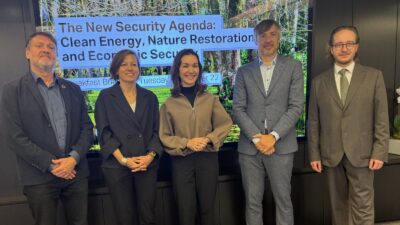
On September 22 2026, the Global Commons Alliance Secretariat and ClientEarth convened ministers, scientists, lawyers and security specialists in New York for ‘The New Security Agenda: Clean Energy, Nature Restoration, and Economic Security’, a Climate Week NYC 2026 event examining how clean energy, nature restoration and resilient food and water systems are reshaping how governments think about national security.
Climate Week NYC 2026 takes place during the UN General Assembly’s High-Level Week, and just hours before Secretary-General António Guterres told the Assembly that climate change is one of four defining “tests of power” facing the world, the Global Commons Alliance Secretariat and ClientEarth convened a room of ministers, scientists, lawyers and security specialists to ask a related question: what does it actually mean, in practice, to build security on a destabilizing planet?
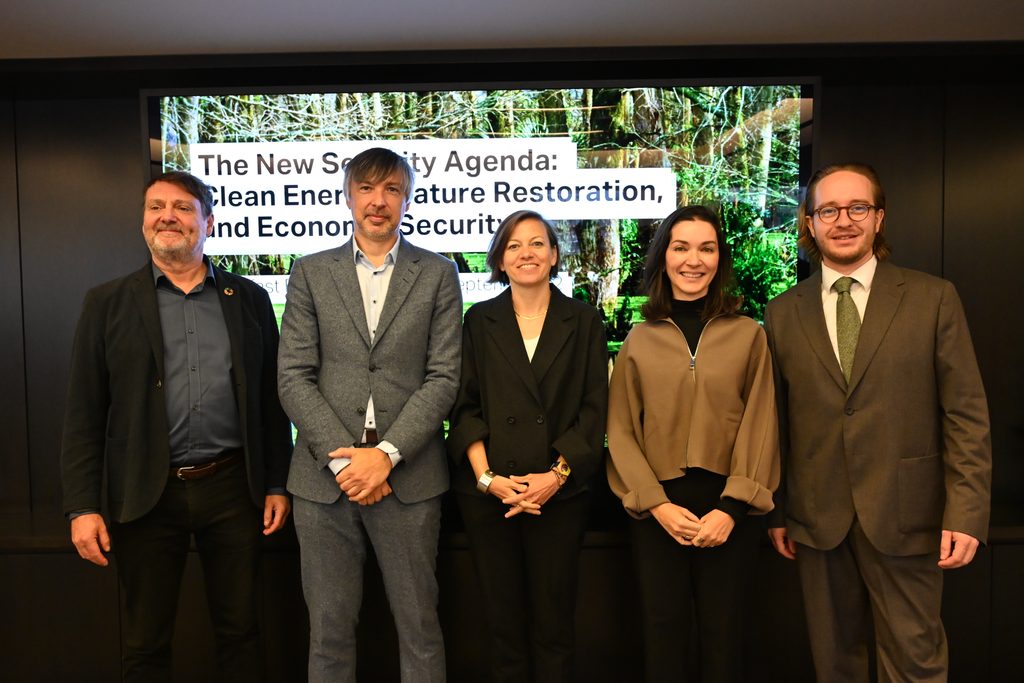
Across ninety minutes of discussion, expert speakers agreed that energy, nature and security are no longer separable problems, and governments that treat them that way are already behind. Sebastian Schienle, co-director at Global Commons Alliance, welcomed all participants and speakers, highlighting the strategic value to have this discussion on energy and nature security at the 81st high-level session of the UN General Assembly.
ENERGY SECURITY STARTS AT HOME
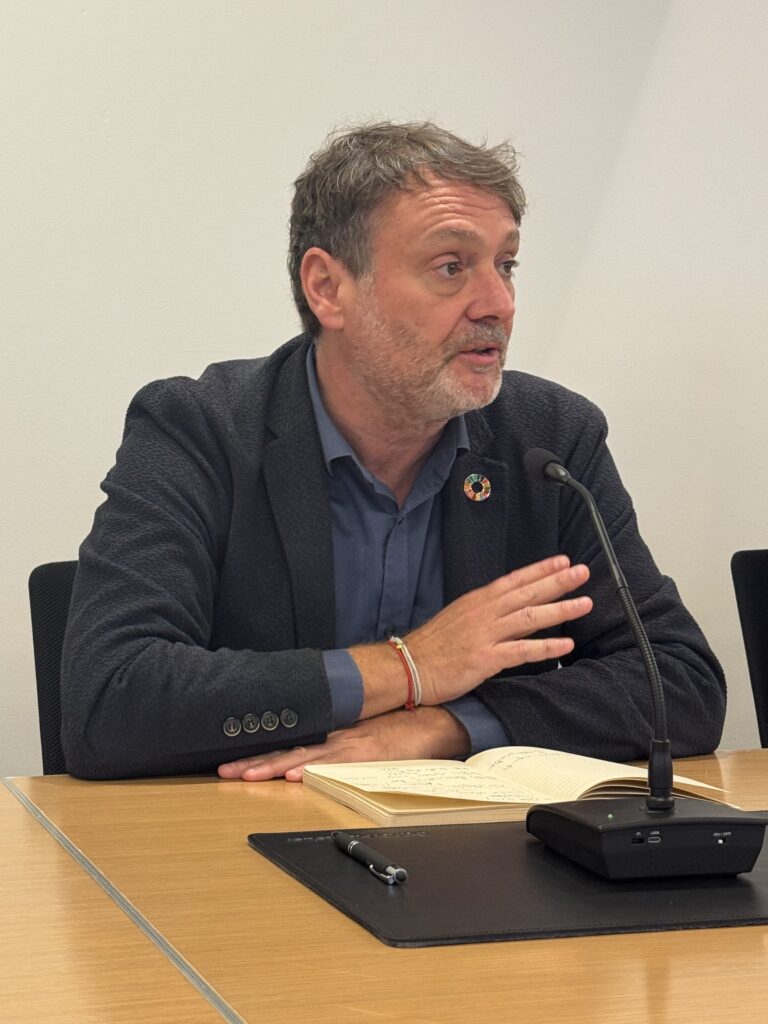
The opening keynote came from Minister Krzysztof Bolesta, Secretary of State, Ministry of Climate and Environment, Poland, who paired a stark economic figure — Poland spent US$25 billion on fossil fuel imports last year — with the case for treating renewables as a security investment in their own right: “If you invest in homegrown energy, this means that our energy system will be more secure, more independent from external shocks. [..] it’s a very, very tangible element of your energy security portfolio.”
Minister Bolesta described a stretch of the country’s eastern border being returned to wetland and forest, as doing double duty as both habitat and a natural buffer against military movement. “The terrain, forest, swamp, bogs; they all fight, they help you keep your opponents away.”
THE ECONOMIC COST OF CLIMATE INACTION
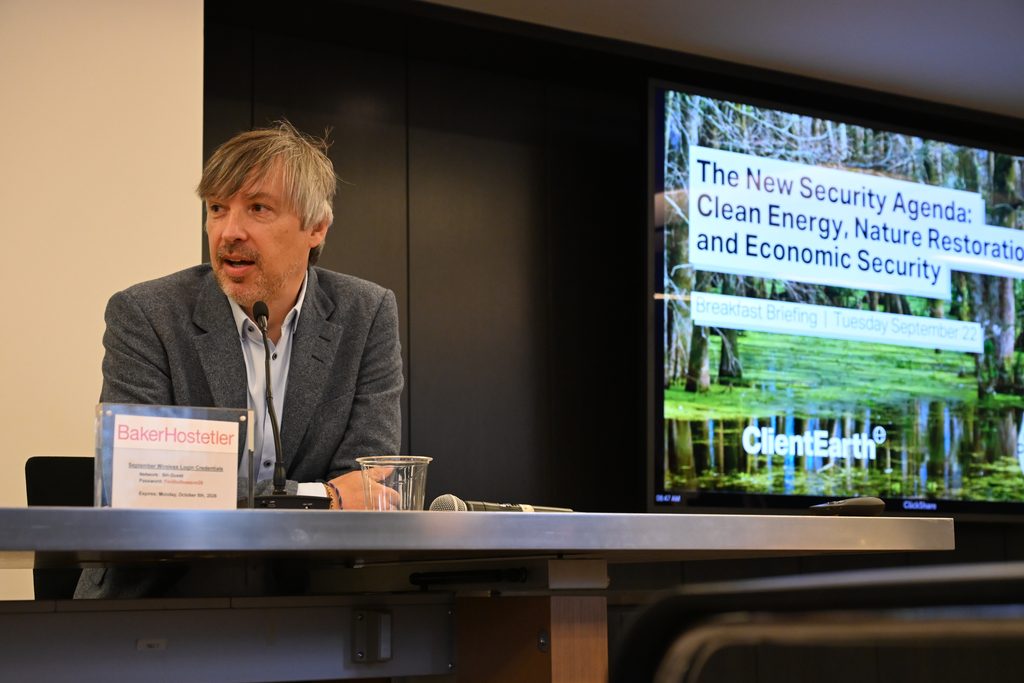
Luc Bas, Director of Belgium’s CERAC (Climate Risk Assessment Centre) and Chief Planetary Officer noted that Belgium is one of the most water-stressed countries in Europe despite its rainfall, a risk compounded by poor water management and agricultural over-consumption. The cost of inaction, he argued, is no longer abstract: “Yesterday we released a report on labor productivity that we lost during the summer. It wiped out the small growth that was still existing in Belgium [..] just because of productivity loss, because of the heat.” His broader warning was against “climate tunnel vision”, the tendency to treat climate as a standalone issue rather than one node in a wider web of resource, health and social risk.
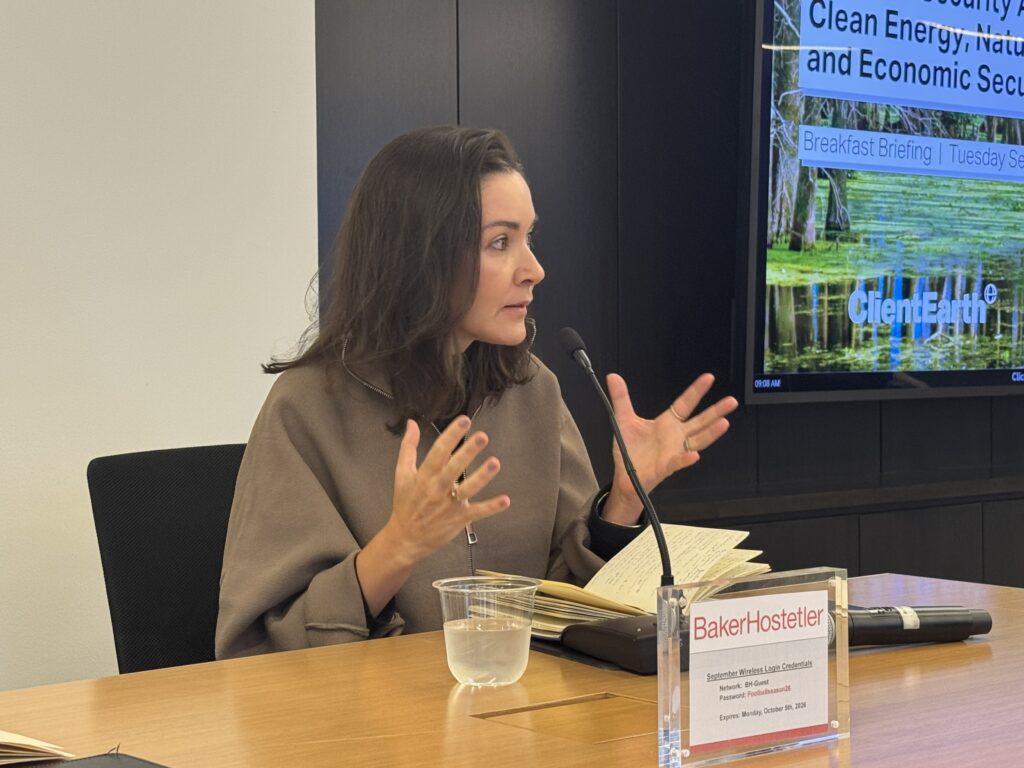
That web came into sharp focus with Ilona Szabó de Carvalho, Co-founder and President of Brazil’s Igarapé Institute, who described visiting an Amazon community near the Peruvian border kept safe from regional conflict by nothing more than intact rainforest; a literal “nature shield” now under threat as drying rivers force new roads, and new roads bring the instability the forest had kept out. Her conclusion was blunt: “The planet will survive, we won’t. We need to integrate these approaches.”
On finance, she pushed back on the idea that nature investment is a lesser asset class, arguing that countries’ national climate plans should treat investment in nature and renewables as core to their “strategy for economic resilience” instead of sidelined behind projects that end up reinforcing the very climate stresses they’re meant to address.
CLOSING THE LEGAL GAP ON FOSSIL FUEL DEPENDENCE
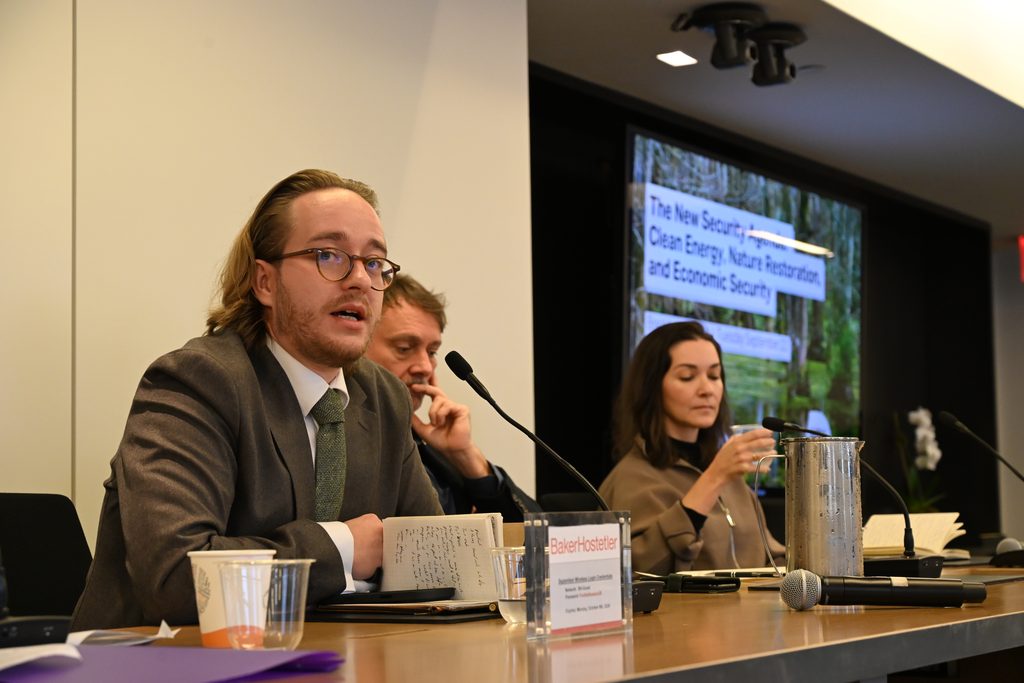
Dr Wojciech Modzelewski, Lawyer Public Finance, Energy Markets and Competition ClientEarth grounded the discussion in policy, pointing to the EU’s binding Nature Restoration Law and citing new figures on the cost of fossil dependence. Europe’s latest energy crisis added an estimated €90 billion to its import bill. His point on energy security cut against a common assumption: “If the country is dependent on fossil fuels, it is dependent on political situations or conflicts that are often out of country control.”
The same argument was echoing well beyond this event. Just days earlier, UN Climate Chief Simon Stiell described the transition away from fossil fuels (the proposed 35%-electricity-by-2035 target for COP31) as “a development strategy, an industrial strategy, a health strategy, and a security strategy.”
A CALL FOR INTEGRATED ACTION
Rachel Kyte, the UK’s Special Representative for Climate, closed the event by connecting the discussion directly back to the day’s UN proceedings. Referencing the UK’s new National Security Assessment on biodiversity loss and ecosystem collapse, as well as a meeting of foreign ministers her Foreign Secretary Ed Miliband was convening on the same theme, she offered the line that framed the whole event: “Climate is everything, and everything is climate.” She drew a direct line to the recent disasters in Nepal and China: “that was a slow onset crisis that became a fast disaster,” as a reminder that the frameworks built for gradual change are already being outpaced.
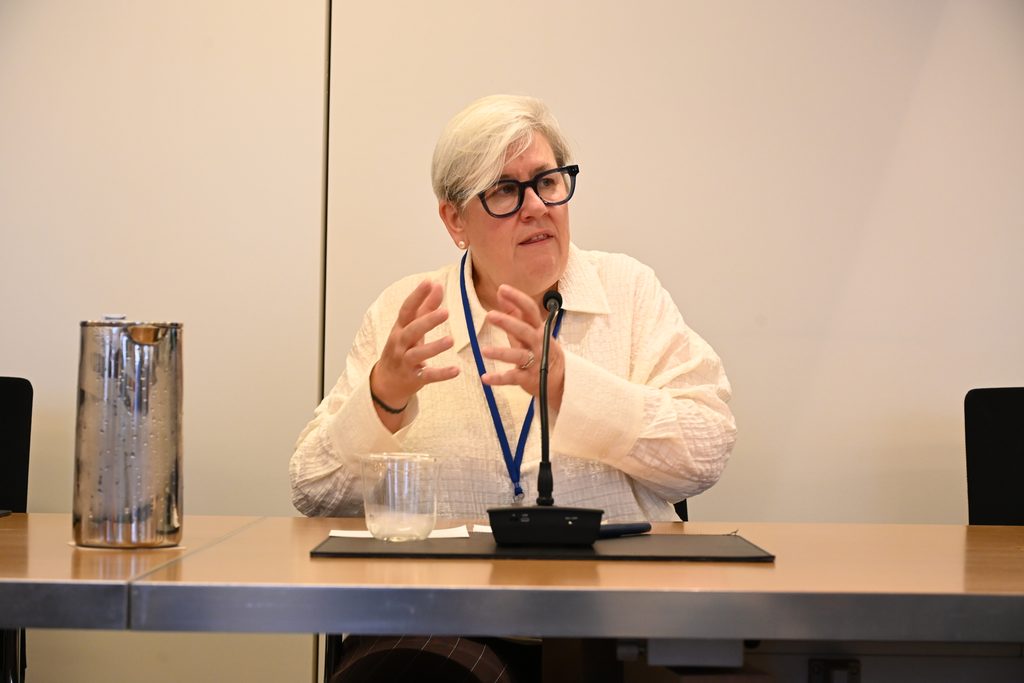
Moderator Zuzanna Rudzińska-Bluszcz, 2026 Yale World Fellow, former Deputy Minister of Justice of Poland concluded: “If I were to summarize this panel discussion, I think that in the third decade of the 21st century, we have to just ditch tunnel vision and move to integrated responses. And since I’m working on democratic resilience, I think that at the very bottom is building trust, and this is a thought that I’m sticking with for this following week of high-level meetings.”
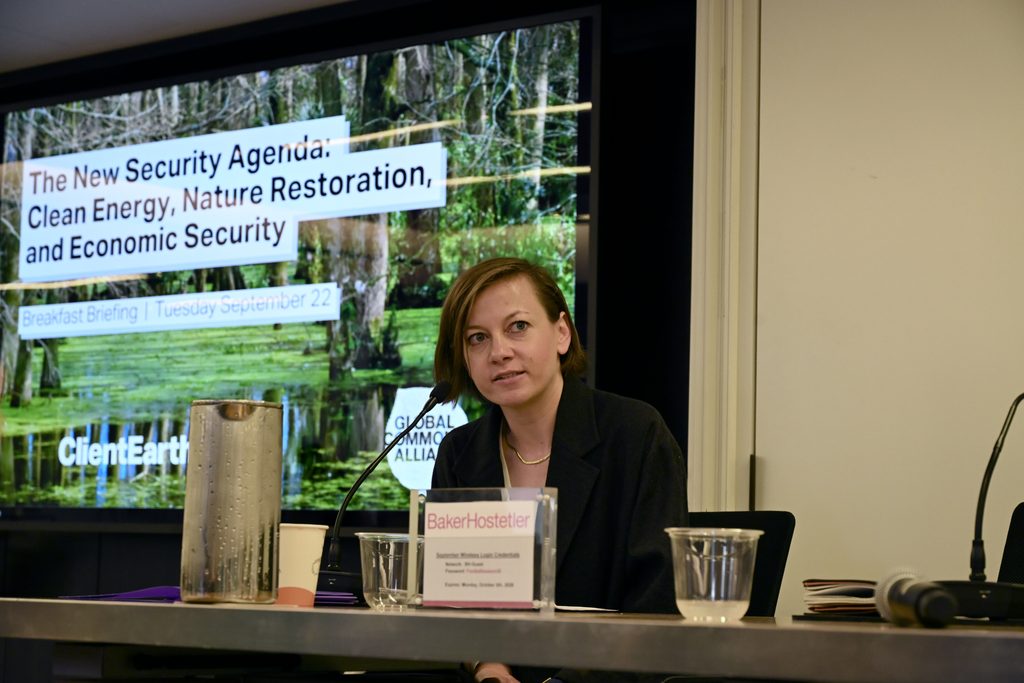
Pierre Cannet, Global Head of Public Affairs and Policy at ClientEarth, thanked all speakers and participants and called on them to carry the discussion forward after UNGA, drawing on their respective missions, roles, and expertise to help accelerate the energy transition and strengthen nature protection.
Across five speakers and three continents, the message converged on the same point: security, energy, nature and climate can no longer be planned separately. Resilience must be built into ministries of finance and defence, not left to environment ministries alone. That’s the thinking GCA and ClientEarth hope follows policymakers back to their capitals, ministries and budgets in the lead up to the UN COP31 climate talks in Antalya and CBD COP17 biodiversity conference in Yerevan in a matter of weeks.
Article and photos: Pierre Cannet, Global Head of Public Affairs and Policy, ClientEarth, and Sebastian Schienle, Co-Director (Partnerships and Programs), Global Commons Alliance.