Solutions and Strategies for bigger than silo impact
02/07/2026
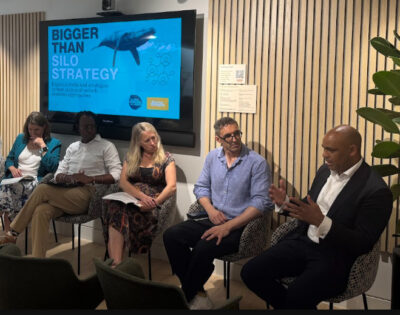
As part of London Climate Action Week 2026, Global Commons Alliance and Sharing Strategies brought scientists, philanthropists, economists and city leaders together for ‘Bigger Than [Silo] Strategies’ to ask how we move beyond siloed thinking, to drive systems change for a safe and just society.
Humanity has overshot seven of the nine planetary boundaries that govern a safe and just Earth system, explained Wendy Broadgate, Earth Commission. “Our extractive economies are going too far, and we’re deep into the Anthropocene. Humans and human systems are part of this Earth system, but we’re the biggest driver of change on the planet now.” Yet despite Earth and human systems being part of one interconnected whole, we are tackling them separately rather than together.
Will Tucker of GCA argued that systems change requires a “bigger than silo” approach comprising of:
- Solutions which reflect that science and recognize that people experience ‘issues’ (climate impacts, health, inequality, biodiversity loss, water scarcity…) not as distinct challenges, but as a tidal wave reducing dignity and opportunity.
- Integrated influencing across governance and policy, economics and business action, and culture and society (the GCA’s three ‘levers for change’) which together can enable enduring systems change.
- More focus on upstream determinants of outcomes, including through systems of government, measures of economic success, dominant cultural values.
Breaking out of silos and looking for smart opportunities
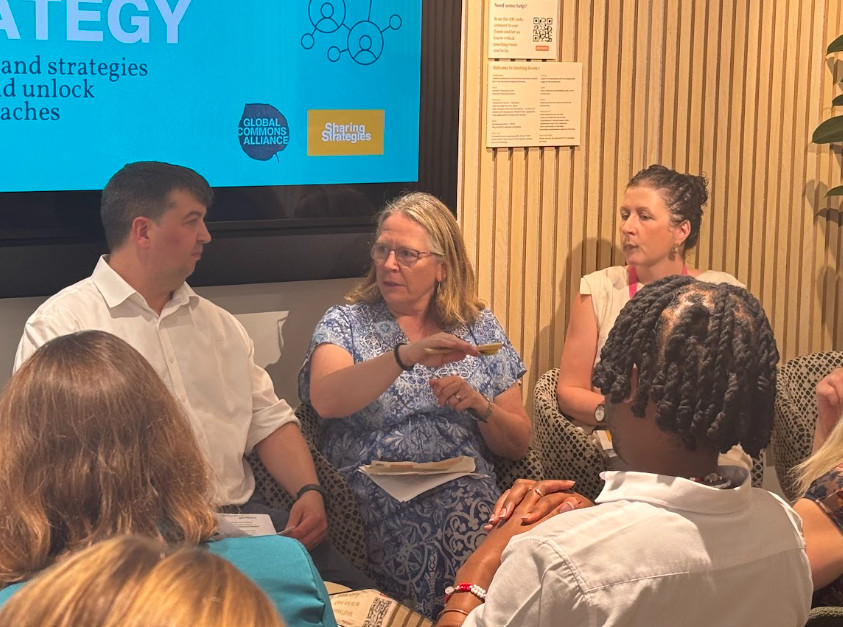
The case for cross-sector thinking was underscored by CIFF’s Rosalind McKenna who stressed that the UK’s recent heatwave doesn’t just disrupt education through school closures; injustice ripples into childcare and nutrition inequity: “Children’s lives don’t exist in silos, so you have to be intersectional.”
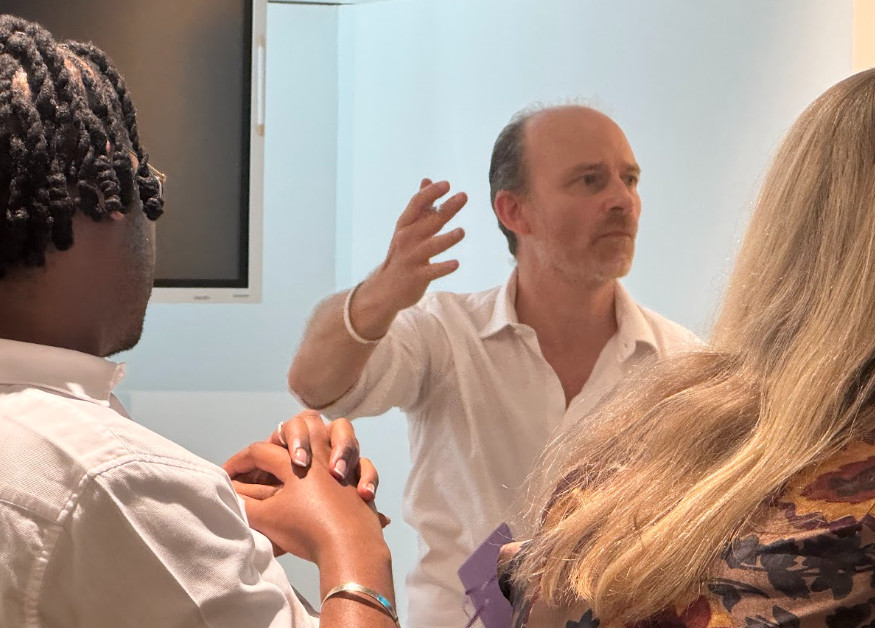
Rosalind and Jamie Drummond of Sharing Strategies also emphasized that in order to progress a holistic systems change agenda we have to focus on the specific steps which progress that vision. As Rosalind put it, “breaking out of our silos is important, but I think we also need to be thoughtful about how we do that, and where the connections are that we want to build out.”
Although all speakers agreed that treating climate, poverty, health and economic policy as separate problems no longer works, Jamie also emphasized, “we embrace complexity because we think it makes us sound smart. Our enemies just say: take back control. Make America great again”, and that we need to ensure we don’t over-complicate our narratives.
Jamie also emphasized that as a movement we have to look for the smart opportunities to progress this holistic agenda. He reminded us that, the next couple of years in the UK provides one potential opportunity; there will soon be a new UK Prime Minister, who has a background seeking to integrate solutions and combine contributions across public, private and social sectors to become more than the sum of their parts. In 2027 the UK will hold the presidencies of the G7 and in 2028 the G20, and the combination of these circumstances potentially provide the crucible for genuinely bold new thinking and approaches to progress a just world, on a safe planet.
Significant focus in the session was on solutions and strategies which are already accelerating holistic impact and systems change.
Systemic leadership
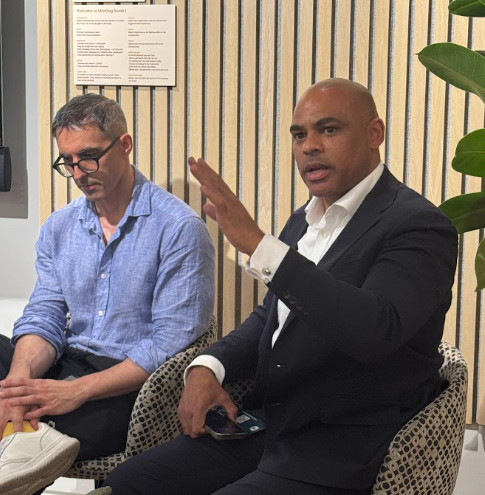
Lord Marvin Rees, founder of Civic Net Zero and former Mayor described his “One Bristol Approach”, which, like ‘Manchesterism’, focuses on understanding the systemic determinants of outcomes (e.g. how housing, employment and discrimination affects mental health), and on mobilizing the private sector alongside local and national public services and civil society towards shared goals.
Gavin Hayman of Open Contracting, suggested public procurement (worth US$13 trillion globally per year) as the ultimate cross-cutting solution which requires two main shifts: 1) “Rethinking the whole purpose around public procurement … so that it has tremendous leverage over all the other problems we’re trying to tackle”, and 2) using data and digital tools to drive innovation and results-focused spending by governments. Marvin and Gavin shared real hope that governments can be ambitious and achieve more when they take a more holistic and systemic approach to leadership and delivery.
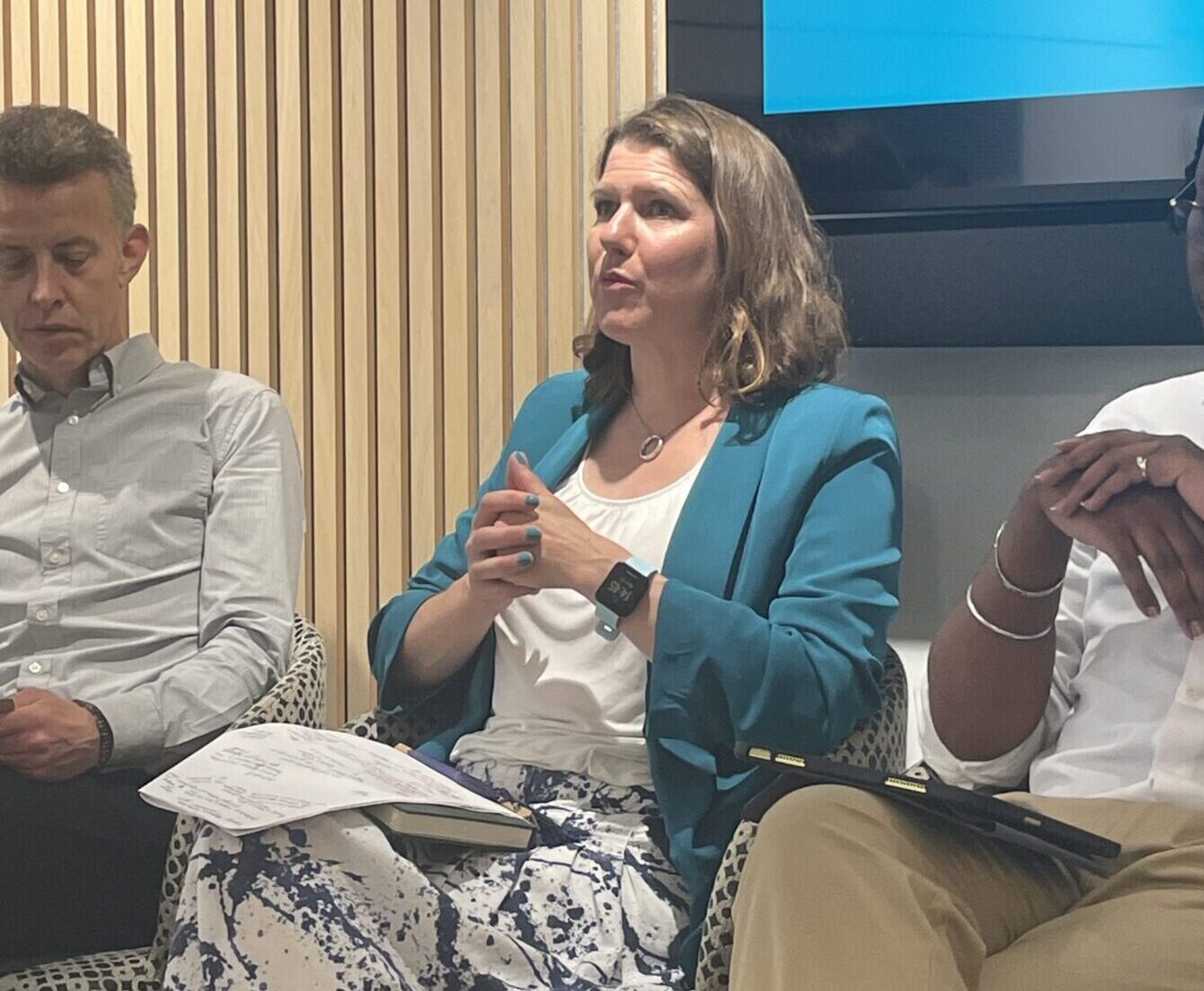
Emphasizing that “we get to choose collectively what the economy looks like”, Jo Swinson, Director of Partners for a New Economy, explained their support and made the case for a bold rethinking of our economic model. Jo and their partners, advocate for an economy which is “regenerative by design… not only in the ecological sense, but also in the social sense”, and for a new social contract between citizens, businesses and governments to make sure that everyone, everywhere, has the ability to live a “nice life”.
Building culture
Sekoetlane Phamodi of New Economy Hub and African Climate Foundation, argued that the cultural groundwork has to come first: “We have to build culture. That culture has to be so pervasive, so surround sound, that it becomes the very air that we breathe.” Sekoetlane went on to share their “layered approach” to funding cultural engagement via syndicated journalism (with The Conversation Africa) and local radio through their “Economies Care” program, which fosters local relevance and connection.
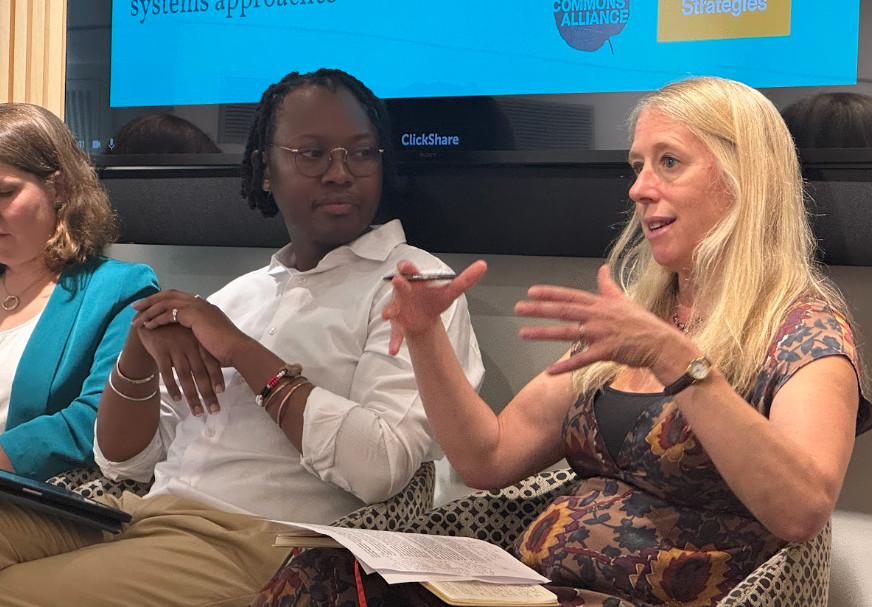
Iain Dodgeon, Director of OKRE, explained their approach to helping audiences understand interconnected systems and challenges by exposing creative industries to diverse science and perspectives, especially to people whose lived experience reflects the messy reality of multiple interlinked and overlapping challenges having cumulative effects. Iain cautioned the audience though: “Single issue funding leads to single issue content [which] leads to single issue understanding”, which dampens audience engagement and storytellers’ ability to help audiences understand the systems which shape their lives.
Romilly Greenhill of BOND, stated that there are international frameworks, such as the Sustainable Development Goals, which have helped governments and other stakeholders think in a more integrated way but that finance, particularly public finance, is critical. Governments, Romilly argued, will have to get more creative and look at several agendas, from ending fossil fuel subsidies to polluter pays taxation and solidarity levies.
Genuine co-creation
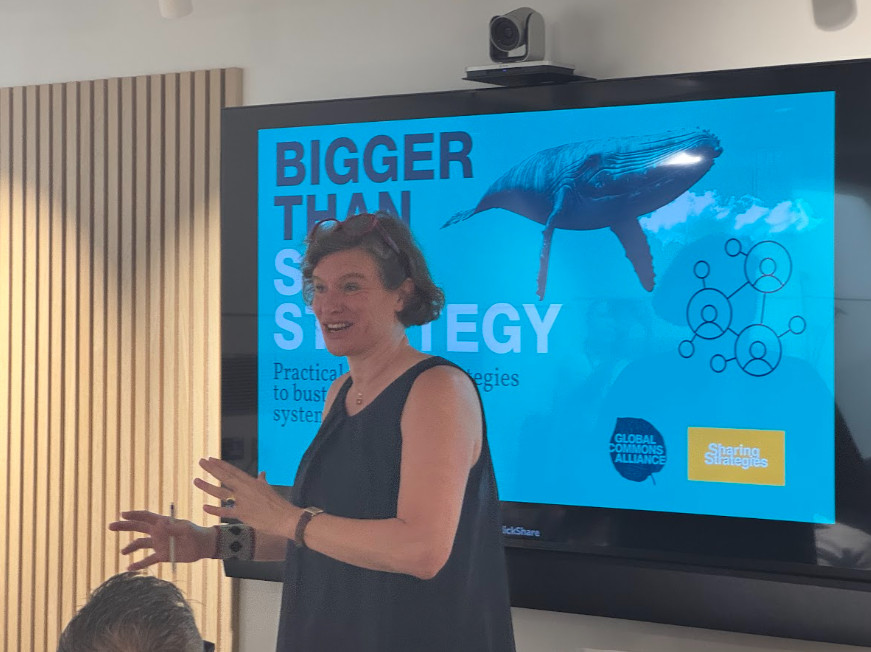
Closing the event author and UCL Professor, Mariana Mazzucato, called on the audience to be bold and ambitious. She set out her practical five-part compass – explained in more detail in her book The Common Good Economy – which is designed to help institutions, companies and civil society to achieve better outcomes for people and planet: clear missions, genuine co-creation, shared knowledge, shared rewards, and real transparency.
This event showed that the solutions, tools and partnerships for systems change are emerging and growing.
If you’re working in any of these areas, join us in building a Bigger Than Silo movement for a just world, on a safe planet.
Stay informed about our events with our bi-weekly newsletter and learn about joining the Alliance.
Event photos


–