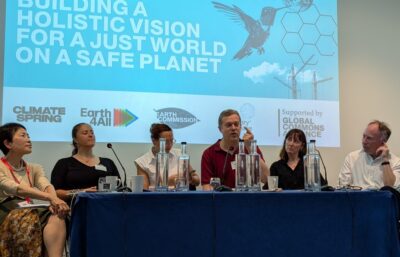
Imagining a just, climate-safe future at London Climate Action Week 2026
01/07/2026
At London Climate Action Week 2026, “A World Worth Choosing” asked a simple but urgent question: what does a just world on a safe planet actually look like, in tangible terms, for communities around the world?
Systems thinkers, scientists and communicators made the case that rather than a sacrifice, it’s the most compelling vision for prosperity, resilience, and belonging in the 21st century — but we need to get better at telling that story.
Sebastian Schienle, Global Commons Alliance set the context, proposing that a genuinely safe and just planet is the foundation for security and human flourishing. He suggested that the strategic task now is to make it visible: to show, in concrete terms and for diverse constituencies, exactly what this world looks like, and why it is worth choosing.
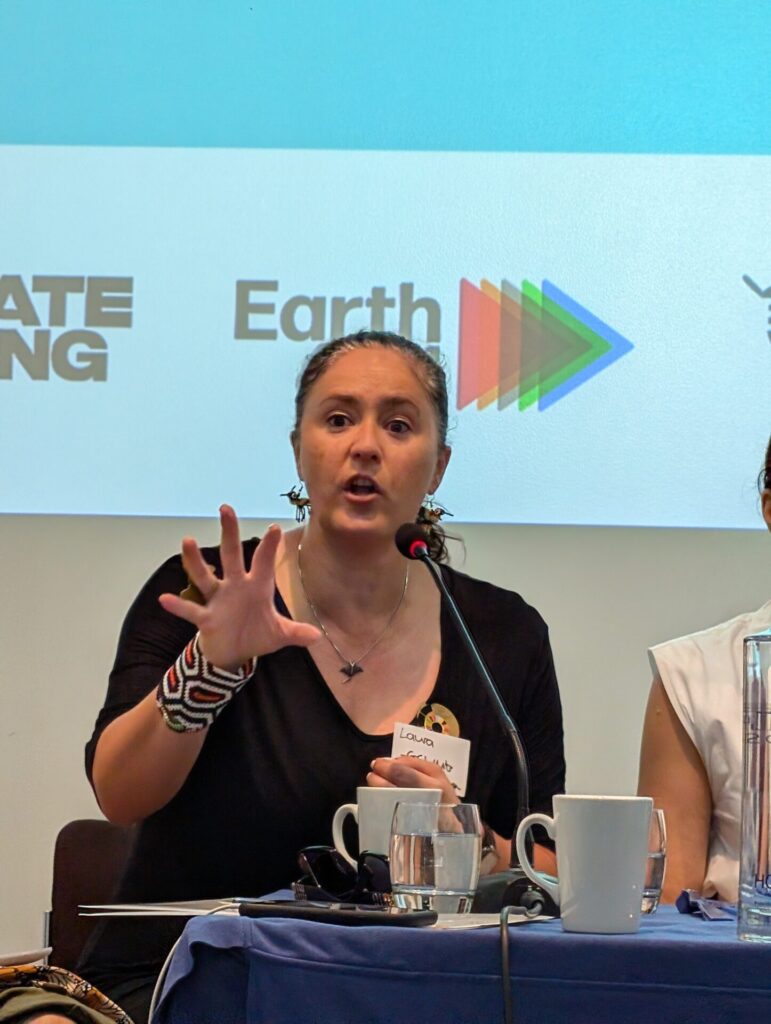
Sandrine Dixson-Declève, Earth4All, named the failures of the current system while making the case that planetary stability and prosperity aren’t a trade-off — they’re the same project. Laura Pereira, Earth Commission agreed that social cohesion and planetary health are inseparable; you cannot fix one while ignoring the other, as the science also shows.
Urging the room and wider ecosystem to focus on outcomes which improve people’s lives, Jeremy Oppenheim of Systemiq didn’t shy away from naming how far behind the pace of change we still are.
Naoko Ishii, Center for the Global Commons, made a case for integrating nature into economic decision-making, but also challenged us to grapple with the real tradeoffs we need to address along the way.
A safe and just world
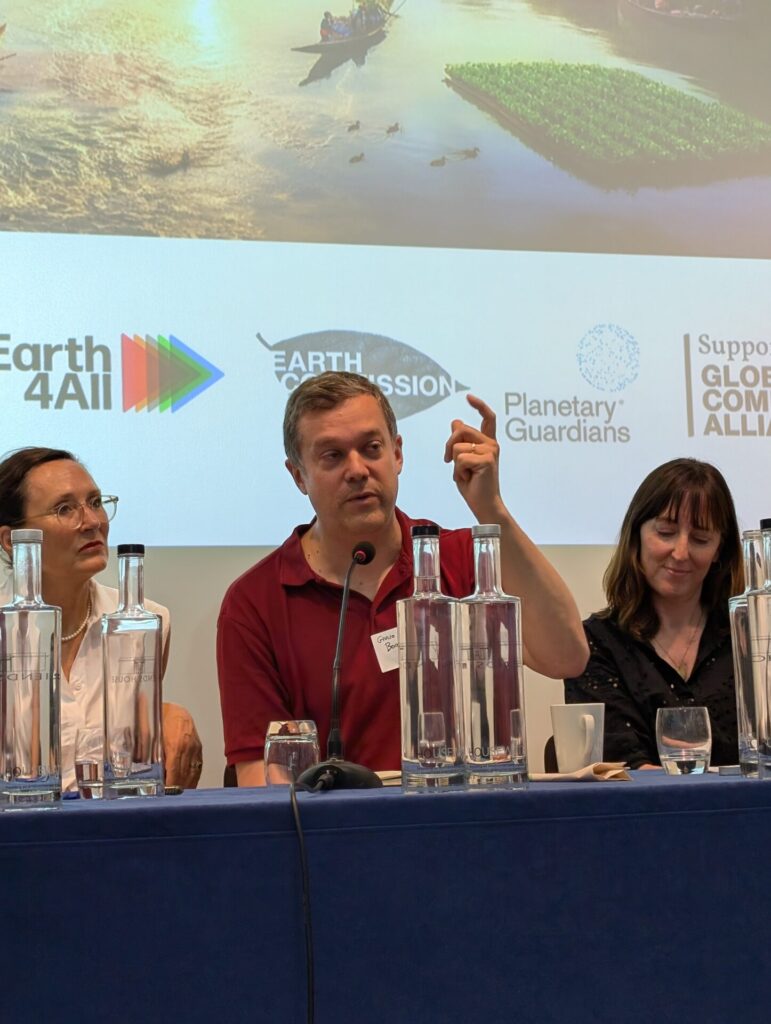
Giulio Boccaletti, author and Scientific Director of the Euro-Mediterranean Center on Climate Change called for renewing the republican idea of freedom — one that is grounded in collective responsibility for our shared environment. Lucy Stone, Climate Spring argued that stories are sustainability’s most underused lever, and that we need to address the underlying beliefs, identities, and stories that shape what people think is possible.
Following the panel, the audience were invited to visualize what would genuinely have changed for a person they knew, in a future worth wanting — and what each organization’s most powerful contribution to making that future real could be.
Building a real-life vision
Three common themes that stood out from the separate groups’ discussions:
- Vision has to be lived-in, not aspirational: The most powerful answers were about air people could breathe, places people could afford to live, and food systems that no longer made people sick — all anchored in people’s lived experience.
- Freedom is the story sustainability hasn’t told well enough: During this exercise, several groups picked up and built on Giulio’s emphasis on “freedom” (including from cost, pollution and harm) as the emotional core still missing from most messaging.
- Scale matters as much as ambition. Whether a vision lives at the local, national, or global level changes what “making it real” actually requires. Yet most organizations are still only operating at one of those scales. Closing this gap is the next frontier in systems work.
Thank you to our co-hosts Climate Spring, Earth4All, the Earth Commission, and Planetary Guardians, to all our panelists for their contributions, and to all participants for the engaging table conversations. The Global Commons Alliance exists to facilitate these kinds of conversations and we look forward to collaborating more in the lead up to COP31 and beyond.
Stay informed about our events with our bi-weekly newsletter and learn about joining the Alliance.
View photo gallery

–